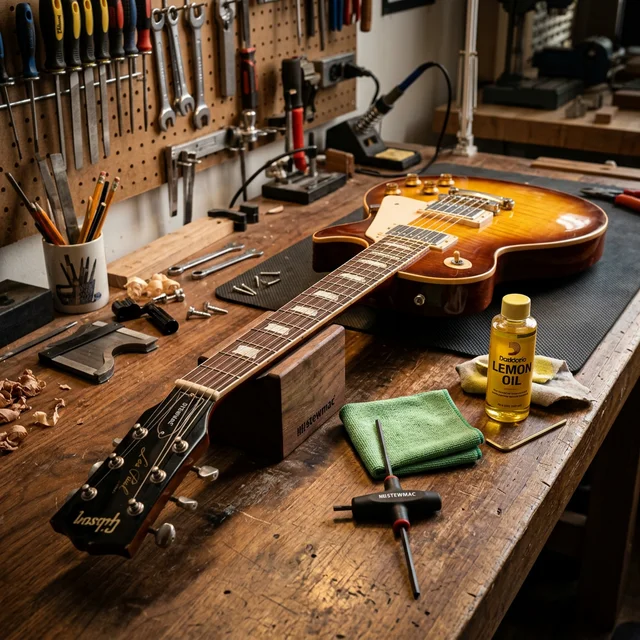

Picture this: you’ve just finished a solid practice session, and your guitar is sitting beautifully on its stand. But as you head to bed, that nagging thought creeps in—should I really leave my guitar out like this?
If you’re wondering is it bad to leave a guitar on a stand, you’re not alone. Thousands of guitarists worry about potential damage from stands, including finish reactions, neck warping, and accidental falls. The good news? For most players using quality stands, leaving your guitar out is perfectly safe and actually beneficial for consistent practice.
Let me break down everything you need to know about guitar stand safety, based on years of experience with both vintage collectibles and daily players.
Quick Answer: Is It Safe to Leave Your Guitar on a Stand?
Yes, it’s generally safe to leave a guitar on a stand if:
- You use a quality stand with guitar-safe materials
- Room humidity stays between 45-55%
- The guitar isn’t in direct sunlight or near heating/AC vents
- Your guitar has a polyurethane finish (most modern guitars)
Be cautious with:
- Vintage guitars with nitrocellulose finishes
- Extremely dry or humid environments
- Cheap stands with reactive foam or rubber
- High-traffic areas where falls are likely
Is It Safe to Leave a Guitar on a Stand Long-Term?
The answer depends on what you mean by “long-term” and how you use your guitar.
For daily players, leaving your guitar on a stand is actually ideal. Professional musicians and studio guitarists keep their main instruments on stands because easy access means more practice time. I’ve had the same electric guitar on my desk stand for over three years with zero issues.
For collector guitars or instruments you play monthly, a case provides better protection from dust, humidity fluctuations, and accidental damage.
The key difference is active use versus storage. Guitars that get played regularly benefit from stable room temperature and easy access. Guitars sitting untouched for months belong in cases.
Potential Risks of Leaving a Guitar on a Stand
Finish Damage from Stand Materials
This is the biggest legitimate concern, especially for guitars with nitrocellulose finishes (common on vintage Fenders and Gibsons).
Nitro finishes can react chemically with certain rubbers and foams, leaving permanent marks or discoloration. I learned this the hard way with a 1970s Telecaster that developed rubber marks from a cheap stand’s contact points.
Modern polyurethane finishes (found on most guitars made after 1980) are much more resistant to these reactions.
Humidity and Temperature Exposure
Room storage exposes your guitar to humidity fluctuations that a case would buffer. Problems include:
- Dry air causing wood shrinkage and fret buzz
- High humidity leading to neck swelling and intonation issues
- Direct sunlight fading finishes and heating the wood unevenly
- AC/heating vents creating rapid temperature changes
In India’s varied climate, this is especially relevant during monsoon season and dry winters.
Accidental Falls
Stands place guitars in harm’s way from pets, children, or clumsy moments. Even quality stands can tip if bumped hard enough.
Wall hangers reduce this risk but create their own concerns about wall mounting and neck stress.
Dust and Dirt Accumulation
Exposed guitars collect dust faster, requiring more frequent cleaning. While not damaging long-term, it means more maintenance compared to cased guitars.
Which Guitars Are Most at Risk on Stands?
High-risk guitars:
- Vintage instruments with nitro finishes
- Guitars worth over ₹1 lakh
- Hollow-body acoustics (more sensitive to humidity)
- Guitars with binding that can separate
Low-risk guitars:
- Modern electrics with poly finishes
- Daily practice guitars under ₹50,000
- Solid-body electrics (less humidity sensitive)
Guitar Stand vs Guitar Case: The Real Comparison
| Factor | Guitar Stand | Guitar Case |
|---|---|---|
| Daily Access | Excellent – grab and play | Poor – unpacking needed |
| Humidity Protection | Room dependent | Good buffering |
| Physical Protection | Moderate | Excellent |
| Space Required | Minimal | Storage space needed |
| Visual Appeal | Great for display | Hidden away |
| Long-term Storage | Not ideal | Excellent |
| Travel Protection | None | Essential |
My recommendation: Use stands for guitars you play weekly or more, cases for everything else.
How to Safely Leave a Guitar on a Stand
Based on my experience with dozens of guitars over the years:
Choose the right location:
- Away from windows and direct sunlight
- Not near heating/AC vents
- Stable temperature room
- Low foot traffic area
Maintain proper humidity:
- Use a room humidifier in dry seasons
- Monitor with a hygrometer
- Aim for 45-55% relative humidity
Use quality stands:
- Avoid cheap foam that can react with finishes
- Look for stands with cloth-covered contact points
- Ensure stability – wobbly stands cause falls
Regular maintenance:
- Dust weekly with a microfiber cloth
- Check neck relief monthly during season changes
- Clean strings before they get too grimy
Best Guitar Stands for Long-Term Safety
From years of testing different stands:
- Best Overall: Hercules GS414B
- Auto-grip technology prevents falls
- Cloth-covered contact points safe for nitro finishes
- Extremely stable base
- Best Budget: Fender Multi-Stand
- Holds 3-5 guitars safely
- Good build quality for the price
- Takes up minimal floor space
- Best for Acoustics: On-Stage XCG4
- Padded yoke protects finish
- Stable tripod design
- Minimal neck contact
Look for stands with these features:
- Padded or cloth-covered contact points
- Wide, stable base
- Adjustable height for different guitar sizes
Common Mistakes Guitar Owners Make
- Mistake #1: Using cheap stands with reactive foam – Those ₹500 stands from local music stores often use foam that leaves permanent marks on finishes.
- Mistake #2: Placing guitars near windows – UV rays fade finishes and create hot spots that can damage wood and electronics.
- Mistake #3: Ignoring seasonal humidity changes – Your guitar needs different care during monsoon versus winter months.
- Mistake #4: Leaning guitars against walls – This puts stress on the neck joint and risks falls. Always use proper stands or wall hangers.
- Mistake #5: Never cleaning exposed guitars – Dust and grime build up faster on guitars left out, requiring regular maintenance.
FAQ: Guitar Stand Safety
Can guitar stands damage the finish?
Yes, cheap stands with reactive rubber or foam can permanently damage nitrocellulose finishes. Modern polyurethane finishes are much more resistant. Always choose stands with cloth-covered or inert contact materials.
Is it better to keep a guitar in a case or on a stand?
For guitars you play regularly (weekly or more), stands offer better accessibility and encourage more practice. For collector guitars or instruments played monthly, cases provide superior protection from humidity, dust, and damage.
Can humidity ruin a guitar on a stand?
Extreme humidity changes can cause neck warping, fret buzz, and finish cracking. Room storage exposes guitars to more fluctuations than case storage. Maintain 45-55% humidity for best results.
Are wall hangers safer than stands?
Wall hangers eliminate fall risks from bumping but create concerns about wall mounting strength and long-term neck stress. Both are safe when used properly—choose based on your space and preferences.
Should expensive acoustic guitars stay in cases?
High-value acoustics (over ₹1 lakh) benefit from case storage due to their sensitivity to humidity and the higher cost of repairs. Daily-use acoustics under ₹50,000 are generally fine on quality stands.
Can I leave my guitar out overnight?
Overnight storage on a stand is perfectly safe. The concerns about guitar stand damage relate to weeks or months of storage, not overnight periods.
Final Verdict: Stand or Case?
After handling hundreds of guitars over the years, here’s my honest take: a quality guitar stand is safe for most players and actually improves your guitar experience.
The accessibility factor alone makes stands worthwhile—guitars that are easy to grab get played more often. I’ve seen too many beautiful instruments become closet decorations because pulling them out of cases felt like a chore.
Use stands when:
- You play the guitar weekly or more
- It’s a modern guitar with poly finish
- Your room has stable temperature and humidity
- You want to encourage more practice time
Use cases when:
- The guitar is worth more than you’d want to replace
- You live in an extremely humid or dry climate
- The guitar has a vintage nitro finish
- You play it less than monthly
Remember, the biggest risk to any guitar isn’t the stand—it’s not being played at all. A guitar that sits in a case for months doesn’t bring you any joy. Choose the storage method that gets your guitar in your hands most often, and you’ll be making the right choice.
Looking to upgrade your guitar setup? Check out our guides on best beginner guitars for new players and guitar maintenance tips to keep your instrument in top condition.