Best Guitar Strings for Beginners: 5 Sets That Won’t Destroy Your Fingers (2026)
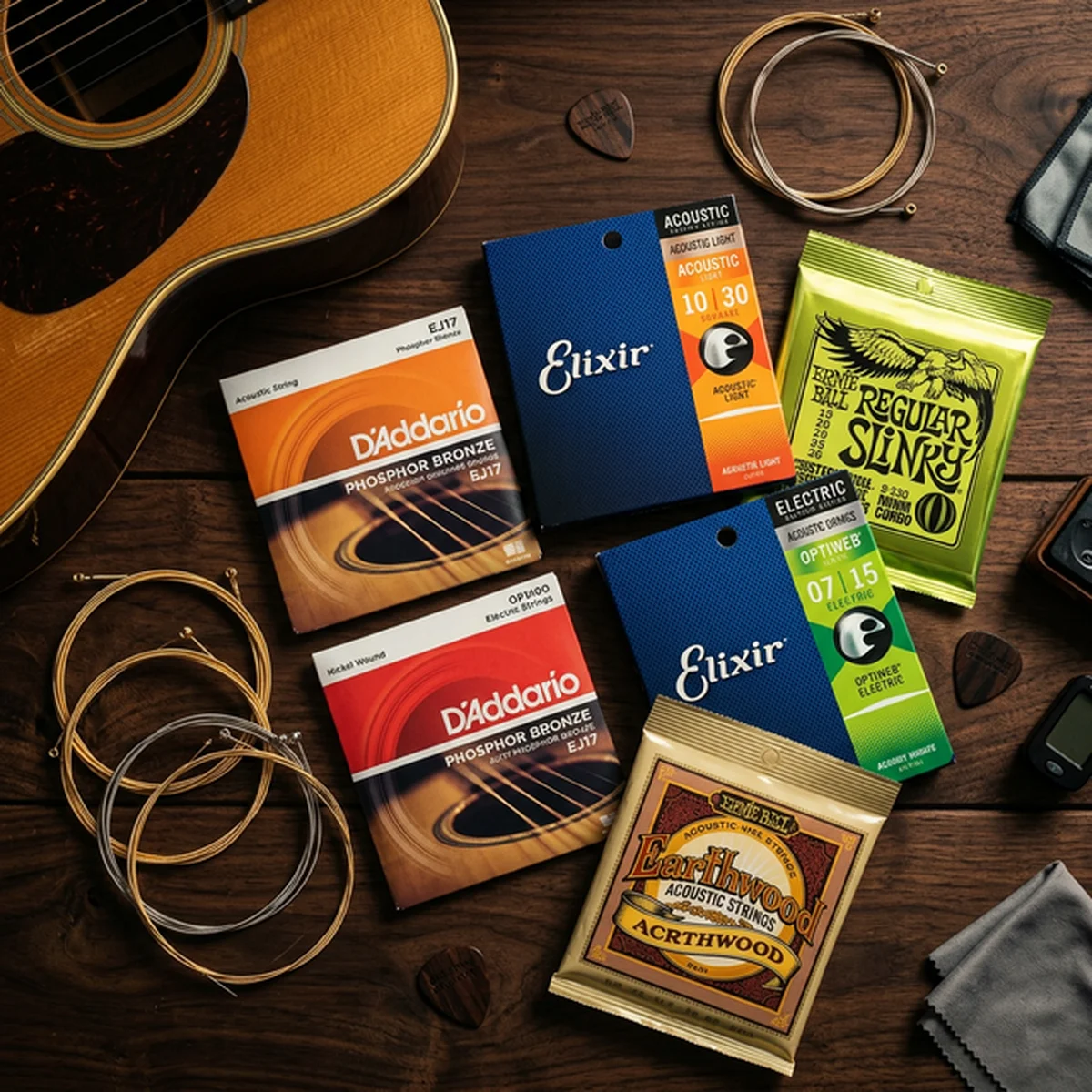
Choosing the right guitar strings as a beginner can make or break your experience. The wrong strings will shred your fingertips, sound dull within days, and make you want to quit. The right strings feel comfortable, sound great, and last long enough to justify the cost. After testing over 20 different sets across acoustic and electric guitars, here are the 5 best guitar strings for beginners that actually deliver.
Quick Comparison Table
| String Set | Type | Gauge | Price | Best For |
|---|---|---|---|---|
| D’Addario EJ16 | Acoustic (Phosphor Bronze) | .012-.053 (Light) | ~$7 | Best overall acoustic strings |
| Elixir Nanoweb Phosphor Bronze | Acoustic (Coated) | .012-.053 (Light) | ~$15 | Longest-lasting acoustic strings |
| Ernie Ball Earthwood Extra Light | Acoustic (80/20 Bronze) | .010-.050 | ~$6 | Easiest on fingers (acoustic) |
| Ernie Ball Regular Slinky | Electric (Nickel Wound) | .010-.046 | ~$6 | Best overall electric strings |
| D’Addario XS Coated | Electric (Coated Nickel) | .010-.046 | ~$13 | Longest-lasting electric strings |
What Beginners Need to Know About Guitar Strings
Before we dive into the picks, here’s the crash course on what actually matters when choosing strings:
Gauge (Thickness) = How Easy They Are to Play
String gauge is measured in thousandths of an inch. When guitarists say “I use 10s,” they mean the thinnest string is .010 inches. Lower gauge = easier to press down, easier to bend, less finger pain. As a beginner, you want the lightest gauge you can get away with:
- Acoustic: Start with Extra Light (.010-.047) or Light (.012-.053)
- Electric: Start with .009-.042 (“9s”) or .010-.046 (“10s”)
Material = How They Sound
- Phosphor Bronze (acoustic): Warm, balanced, great midrange. The most popular choice.
- 80/20 Bronze (acoustic): Brighter, crisper, more high-end sparkle. Great for strumming.
- Nickel Wound (electric): Warm and versatile. The standard for electric guitar.
- Stainless Steel (electric): Brighter, more aggressive. Better for heavy genres but rougher on fingers.
Coated vs. Uncoated = How Long They Last
Coated strings (like Elixir or D’Addario XS) have a microscopic polymer coating that protects against sweat, oil, and corrosion. They cost 2-3x more but last 3-5x longer. For beginners who don’t want to change strings every few weeks, coated strings are worth every penny.
The 5 Best Guitar Strings for Beginners (Detailed Reviews)
1. D’Addario EJ16 Phosphor Bronze Light — Best Acoustic Strings Overall
The D’Addario EJ16 is the best-selling acoustic guitar string set in the world, and for good reason. These phosphor bronze strings deliver a warm, balanced tone with enough brightness to cut through when strumming. The light gauge (.012-.053) is manageable for beginners while still producing a full, rich sound that won’t sound thin.
Why beginners love them: Consistent quality pack to pack, comfortable tension, and they’re available literally everywhere. At ~$7 per set, you can afford to change them regularly as you build up calluses. D’Addario’s corrosion-resistant packaging means they’re fresh when you open them, too.
- Material: Phosphor Bronze
- Gauge: .012, .016, .024, .032, .042, .053
- Lifespan: 2-4 weeks of regular play
- Best For: Fingerpicking, strumming, all-around acoustic playing
2. Elixir Nanoweb Phosphor Bronze Light — Best for Sweaty Hands
If your strings seem to die after a week, Elixir Nanoweb strings will change your life. Their ultra-thin NANOWEB coating protects the strings from the oils, sweat, and grime that kill tone. Where uncoated strings might last 2-4 weeks, Elixirs routinely last 2-3 months while still sounding fresh.
Why beginners love them: You change strings way less often (saving money long-term), they feel smoother under your fingers (less friction = less finger noise), and the tone stays consistent week after week. The coating also makes sliding up and down the neck easier—a huge plus when you’re still developing calluses.
The downside? They cost about double the price of uncoated strings. But when you factor in the 3-5x longer lifespan, they’re actually cheaper per month than regular strings.
- Material: Phosphor Bronze with NANOWEB coating
- Gauge: .012, .016, .024, .032, .042, .053
- Lifespan: 2-3 months of regular play
- Best For: Players with sweaty hands, anyone who hates changing strings
3. Ernie Ball Earthwood Extra Light — Easiest on Beginner Fingers
If finger pain is your biggest barrier to playing, the Ernie Ball Earthwood Extra Light strings (.010-.050) are the answer. The extra-light gauge means significantly less tension on the neck, which translates to less pressure needed from your fingers. Pressing down barre chords, which usually feel impossible for beginners, becomes noticeably easier.
Why beginners love them: The 80/20 bronze material gives these a bright, punchy tone that sounds great for strumming chord progressions—exactly what most beginners spend their time doing. They’re also extremely affordable (~$6 per set), making them perfect for beginners who are still learning how to change strings and might break one during the process.
Trade-off: Extra-light strings produce a thinner sound than light or medium gauge strings. Once you’ve built up calluses (usually after 1-2 months of consistent playing), consider graduating to light gauge (.012s) for a fuller tone.
- Material: 80/20 Bronze
- Gauge: .010, .014, .020, .028, .040, .050
- Lifespan: 2-3 weeks of regular play
- Best For: Absolute beginners, players with finger pain, smaller hands
4. Ernie Ball Regular Slinky — Best Electric Guitar Strings Overall
The Ernie Ball Regular Slinky (.010-.046) is to electric guitar what the D’Addario EJ16 is to acoustic: the industry standard. These nickel wound strings are used by everyone from Angus Young to John Mayer. They deliver a warm, balanced tone with enough output for any genre—clean jazz, crunchy rock, or high-gain metal.
Why beginners love them: Electric guitar strings are inherently easier to play than acoustic strings (less tension, smaller gauge), and the Slinky 10s hit the sweet spot of being comfortable without feeling flimsy. They bend smoothly, stay in tune well, and pair perfectly with budget pedals like the Boss DS-1 or Behringer TO800.
- Material: Nickel-plated Steel Wound
- Gauge: .010, .013, .017, .026, .036, .046
- Lifespan: 2-4 weeks of regular play
- Best For: All genres of electric guitar, especially rock and blues
5. D’Addario XS Coated Nickel — Best Long-Lasting Electric Strings
The D’Addario XS coated strings are the electric guitar equivalent of Elixir Nanowebs. Their ultra-thin coating protects against corrosion while maintaining a natural, uncoated feel. These are the strings that stay bright and snappy even after weeks of heavy playing.
Why beginners love them: Less string changes, consistent tone over time, and a silky feel that makes fretting and bending effortless. If you’re still developing calluses and find that your strings are dying quickly from sweat, the XS coating will save you money and frustration.
- Material: Nickel-plated Steel with XS coating
- Gauge: .010, .013, .017, .026, .036, .046
- Lifespan: 2-3 months of regular play
- Best For: Electric players who want long-lasting brightness
🎁 FREE Download: The Essential Guitar Scales Cheat Sheet
Stop playing the same three licks. Grab our free 14-page premium PDF guide covering the 5 scales that make up 95% of popular music.
Get It For FreeWhich Strings Should You Buy? (Quick Decision Guide)
- You play acoustic and want the best value: D’Addario EJ16 ($7/set)
- You play acoustic and hate changing strings: Elixir Nanoweb ($15/set, lasts 3x longer)
- Your fingers hurt too much to play: Ernie Ball Earthwood Extra Light ($6/set)
- You play electric guitar: Ernie Ball Regular Slinky ($6/set)
- You play electric and want strings that last: D’Addario XS Coated ($13/set)
How Often Should Beginners Change Strings?
A good rule of thumb:
- Uncoated strings: Every 2-4 weeks if you play daily, or whenever they start sounding dull and feel grimy.
- Coated strings: Every 2-3 months, or when you notice the tone has lost its brightness.
- Signs it’s time to change: Strings look discolored or dark, they won’t stay in tune, they feel rough or sticky, or individual notes sound “dead” and lifeless.
Frequently Asked Questions
Should beginners use light or medium gauge strings?
Always start with light or extra-light gauge. Medium strings (.013+) require significantly more finger pressure, which causes unnecessary pain and fatigue for beginners. Once you’ve played for 6+ months and built calluses, you can experiment with heavier gauges if you want a fuller sound.
Can you put electric guitar strings on an acoustic guitar?
No. Electric strings are made of nickel/steel and are designed to interact with magnetic pickups. They won’t produce adequate volume on an acoustic guitar. Acoustic guitars need bronze or phosphor bronze strings. The reverse is also true: don’t put acoustic strings on an electric guitar.
Do expensive strings really sound better?
Fresh cheap strings will always sound better than old expensive strings. The biggest difference with premium strings (Elixir, D’Addario XS) is how long they maintain their tone, not the peak sound quality. For beginners, this longevity is often worth the extra cost.
Pair Your New Strings With the Right Guitar
Great strings on a bad guitar will still sound mediocre. If you’re playing on a cheap starter instrument that’s hard to keep in tune, it might be time for an upgrade. Check out our 7 Best Acoustic Guitars Under $300 or 9 Best Electric Guitars Under $200 for solid recommendations. And once you’ve strung up your guitar, make sure it’s in tune with our guide to tuning by ear.
Ready to start playing? Browse our Chords Directory for easy songs to learn, or accelerate your progress with our Beginner Strumming Mastery Guide.
This article was written by a guitarist with 10+ years of experience. All strings discussed have been personally tested on multiple guitars. GuitarVader is reader-supported: when you buy through our affiliate links, we may earn a small commission at no extra cost to you.